Keynote Speakers
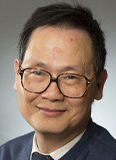
Prof. Duc Truong Pham
University of Birmingham, UK
Title: Robotic disassembly for smarter remanufacturing
Abstract: Remanufacturing is the process of returning a used product to at least the same condition as the original product. Remanufacturing is sustainable manufacturing, helping to save resources (raw materials, energy, water, etc.), reduce greenhouse gas emissions and avoid the need for landfill space. Remanufacturing is part of a circular economy. Disassembly is the first operation in remanufacturing. How disassembly is undertaken can affect the efficiency and capability of remanufacturing. Disassembly is labour intensive and difficult to automate due to variabilities in the condition of the product at the end of its service life. Efforts have been spent on introducing intelligent robots in disassembly to make remanufacturing ‘smarter’. Like other applications of Industry 4.0 automation technologies, this should lead to increased productivity, reduced failure rate, more resource-efficient operations and improved product quality and working environment.
Experience: Duc Truong PHAM OBE FREng FLSW FSME BE PhD DEng FIET FIMechE SFHEA holds the Chance Chair of Engineering at the University of Birmingham. His research is in the areas of intelligent systems, robotics and autonomous systems and advanced manufacturing and remanufacturing technology. He has published over 600 technical papers and books and has graduated more than 100 PhD students. He is a recipient of several awards including five prizes from the Institution of Mechanical Engineers, a Lifetime Achievement Award from the World Automation Congress and a Distinguished International Academic Contribution Award from the IEEE. He is a Fellow of the Royal Academy of Engineering, the Learned Society of Wales, the Society for Manufacturing Engineers, the Institution of Engineering and Technology and the Institution of Mechanical Engineers. He is the founding editor of the Springer Series in Advanced Manufacturing, the founding editor-in-chief of Cogent Engineering and the editor-in-chief of the International Journal on Interactive Design and Manufacturing.

Prof. Caixu Yue
Harbin University of Science and Technology, China
Title:TBD
Abstract: TBD
Experience:Professor, doctoral supervisor, Longjiang Scholar "Young Scholar", Georgia Institute of Technology visiting scholar. At present, he is in charge of one key research and development project and one National Natural Science Foundation project. Participated in the completion of national 863 key projects, National Natural Fund key projects, Heilongjiang Provincial Natural fund key projects and other projects. He has published 50 SCI/EI indexed academic papers, including 2 "ESI" highly cited papers, 2 published works and more than 10 approved invention patents. He is the national director of Advanced Cutting Technology Research Branch of China Machinery Industry Metal Cutting Tool Technology Association, Deputy Secretary General of Heilongjiang Tool Technology Association, standing member of Production Engineering Branch of China Mechanical Engineering Society, and letter evaluation expert of National Natural Science Foundation of China.

Prof. Giuseppe Carbone
University of Calabria, Italy
Title: Examples of innovative robot designs with embodied intelligence
Abstract: Robots are widely used for a number of tasks ranging from conventional industrial applications to service robotics. Researchers aim to further spread robots by improving their performance and/or by finding novel potential applications. These challenging goals can be conveniently achieved by carefully and systematically considering them from the early design stages. This presentation outlines a general procedure for conveniently developing innovative robots for specific applications. This is achieved by identifying appropriate quantitative design specifications. It also requires establishing proper simulation models as well as by implementing them in specific optimal design procedures. This takes into account embodied intelligent solutions to fulfill the desired operation with cost-oriented user-friendly features. Illustrative examples are outlined to show the feasibility and practical usefulness of this approach as referring to recent designs such as parallel/hybrid manipulators, humanoid robots, cable-driven robots for conventional or non-conventional applications including healthcare, agriculture, cultural heritage/space exploration.
Experience: Giuseppe Carbone has got his PhD degree in Robotics from the University of Cassino, Italy, in 2004 where he has been Assistant Professor and Key Member of the Laboratory of Robotics and Mechatronics for about 15 years. He has been visiting professor at Universidad Carlos III of Madrid, Beihang University, Waseda University, and several other well-reputed International Research Institutions. From 2018 he has joined University of Calabria, Italy as Associate Professor. From 2020 he is Chair of IFToMM TC on Robotics and Mechatronics. From 2018 to 2021 he has been Visiting professor at Sheffield Hallam University, UK where he served as Senior Lecturer and member of the Executive board of Sheffield Robotics from 2015 to 2017. From 2021 he is also Scientific Director of the International Research Laboratory Intelligent Robotic Systems and Technologies, University of Belgorod with State assignment of Ministry of Science and Higher Education of the Russian Federation under Grant FZWN-2020-0017. Among others he is Treasurer of the IFToMM Italy Member Organization, Editor-in-Chief of Robotica Journal (Cambridge Univ. Press), Section EIC of Journal of Bionic Engineering, MDPI Robotics, MDPI Machines, Technical Editor of IEEE/ASME Transactions on Mechatronics. He has been PI or co-PI of more than 20 projects including 7th European Framework and H2020 funds. He has received more than 30 Best Paper awards and more than 10 International Best Patent awards. His research interests cover aspects of Engineering Design, Mechanics of Robots, Mechanics of Manipulation and Grasp, Mechanics of Machinery with over 500 research paper outputs, 20 patents, and 16 Phd completions (6 ongoing). He has been also member of 20 PhD evaluation Commissions and viva in Italy, Spain, Finland, UK, Romania, Mexico. He has been invited to deliver Keynote speeches and lectures on his research activity at more than 30 International events. He edited/co-edited four books that have been published by Springer and Elsevier International Publishers. h-index 36 n. citations >5000 (source google scholar). Among other honors, he has received two Honoris Causa Doctoral Degrees.

A.Prof. Guanglei Wu
Dalian University of Technology, China
Title: Path planning of industrial robots for obstacle avoidance
Abstract: In robotic applications, an efficient path planning in a prescribed environment is the central issue, which is a challenging task for multiple degree-of-freedom (dof) articulated robotic arms. In this talk, the path planning for robotic manipulators is introduced, and by combining artificial potential field method and bidirectional rapidly exploring random tree, a BiRRT-APF algorithm is proposed, aiming to handle the problems of highly possible randomness and low search efficiency. In order to improve the attraction function to speed up the efficiency of searching path, the characteristics of the Bi-RRT algorithm (i.e., bi-directional growth of random trees), is integrated to reduce the search time. Subsequently, a path construction strategy is proposed to remove the redundant nodes of the path, for the increased smoothness of the path and reduced memory storages of the algorithm. The effectiveness of the proposed path planning algorithm is illustrated with a 5-dof robotic arm, and is verified with MATLABTM and CoppeliaSimTM co-simulation, through a comparative study among different algorithms. The results show that the proposed BiRRT-APF algorithm can decrease the randomness of node growth and reduce the number of algorithm iterations, resulting in faster convergence of a smooth path for reduced computational burden.
Experience: Guanglei Wu received his PhD in mechanical engineering on the topic of parallel robotics from Aalborg University, Denmark, 2013. He was granted an industrial project by Innovation Fund Denmark and worked as a postdoc fellow in Aalborg University from 2014 to 2016. He was a visiting scholar in the Research Institute in Communications and Cybernetics of Nantes (IRCCyN, the former LS2N) in 2012. From 08/2016, he is an associate professor in Dalian University of Technology. He was the awardee of the Asian MMS 2016 & CCMMS 2016. From 01/2018, Dr. Guanglei Wu was awarded the "Xinghai 1000 Youth Talents" plan. His research interests include conceptual design of robots, performance evaluation of parallel mechanisms, design optimization and industrial robots. He is the referee of a number of international journals and conferences in the fields of mechanisms and robots.

